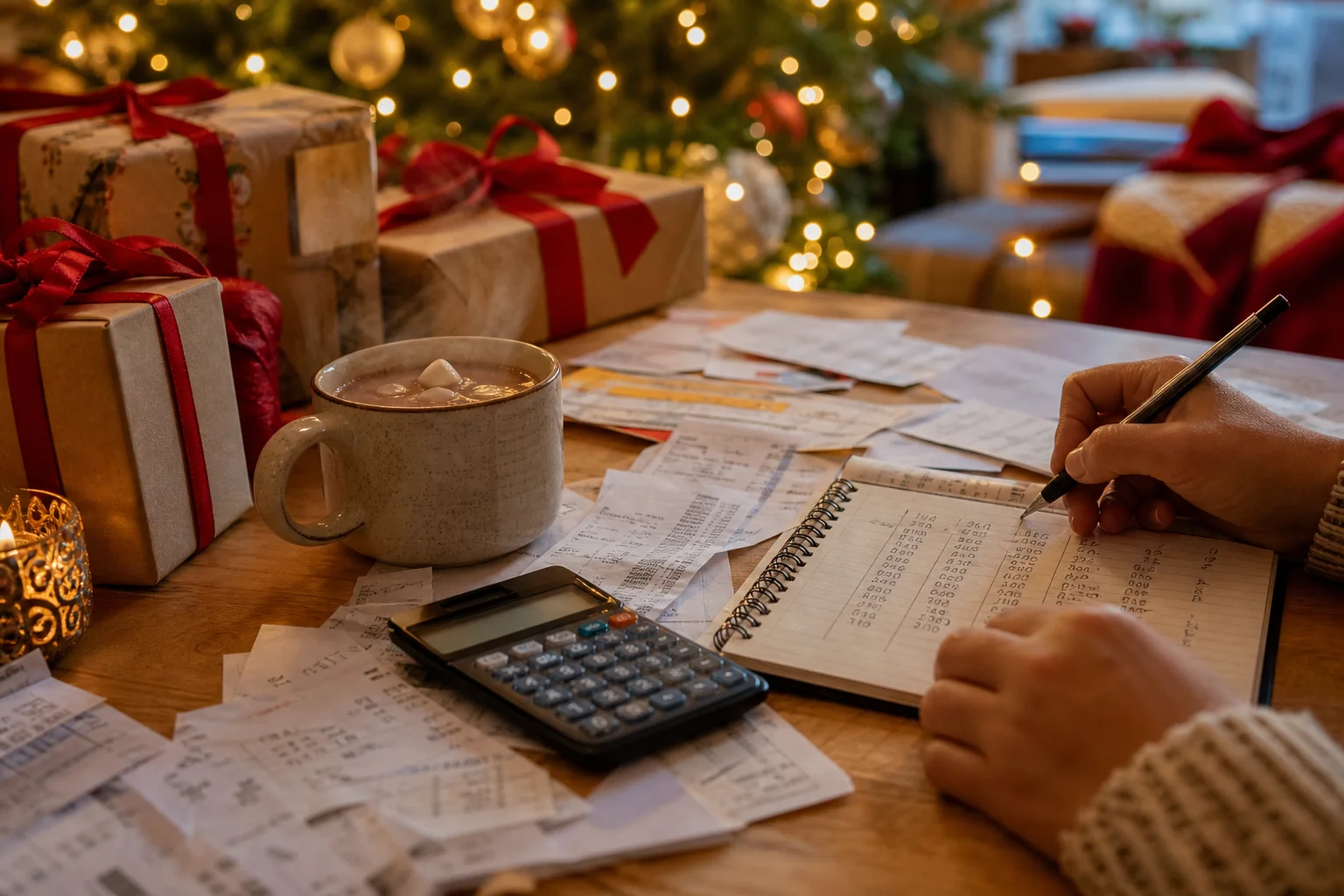
The French are planning a Christmas budget of €478 in 2026, up from €470 in 2025, according to the fourth edition of the Ankorstore study. Regionally, the gap climbs to €229: €612 in Île-de-France versus €383 in Grand Est, covering Christmas gifts, festive meals and decorations.
Christmas budget by region in 2026: from one extreme to almost double
Île-de-France residents plan to spend 1.6 times more than those in Grand Est for the festive season. Here are the known benchmarks so far, along with their sources, since they don't all come from the same survey. In both cases, these are spending intentions declared ahead of the season, not amounts actually recorded at the till.
| Area | Planned Christmas budget in 2026 | Source |
|---|---|---|
| France (average) | €478 | Ankorstore study |
| Île-de-France | €612 | Ankorstore study |
| Occitanie | €408 | France 3 Occitanie |
| Grand Est | €383 | Ankorstore study |
Cost of living, household size, distance to major retailers: these averages lump together very different realities, and two neighbours on the same landing can end up poles apart.
The national average rises for the first time in years
After several winters of decline, the French Christmas budget is edging up again. The downward trend had lasted three years: €529 in 2023, €508 in 2024, €470 in 2025. The €478 announced for 2026 breaks this trajectory, though it's far from making up the lost ground. The study combines responses from around 2,000 consumers and more than 700 independent retailers, surveyed before the season got underway. These are therefore intentions, not till receipts.
Where the money goes: gifts first, price as the deciding factor
Gifts take up 53% of the festive budget nationally, ahead of meals and drinks at 26%, with the rest going towards decorations, accessories and outfits. When it comes to choosing, 41% of French shoppers cite price as their top criterion, well ahead of quality or originality. Shopping channels follow the same logic: 52% shop online, 36% at large supermarkets, and 28% at local shops. In Occitanie, this last figure rises to 38%, according to France 3 Occitanie. The 25-34 age group remains the biggest spenders, with 45% planning to go over the €500 mark.
A detail in the study that changes your shopping calendar
This season, 70% of retailers surveyed plan to limit their stock levels, a proportion up 40 points in one year, with restocking decided at the last minute. You'll feel this most on the most sought-after items: less depth on the shelves, and a growing risk of running out in the second half of December. Spotting what you want in November costs less than scrambling on 20 December. Our guide to buying your Christmas gifts early details the best windows to aim for.
Setting your budget without relying on the average
A regional average says nothing about how many people you're buying for, and that's the number that really drives the final bill. Set an amount per person, then add it all up, rather than splitting a fixed overall budget decided in advance: that's the idea behind the per-person budget approach. Then spread your purchases over several weeks to smooth out the cost, as outlined in this method for spreading out your Christmas spending. One last lever, often the most cost-effective: avoid duplicate gifts. A shared family Christmas list prevents two identical toys under the tree and January returns. Create yours for free in just a few minutes, then work out the cost line by line before 1 December.

Comments 0
No comments yet. Share your experience!
Leave a comment