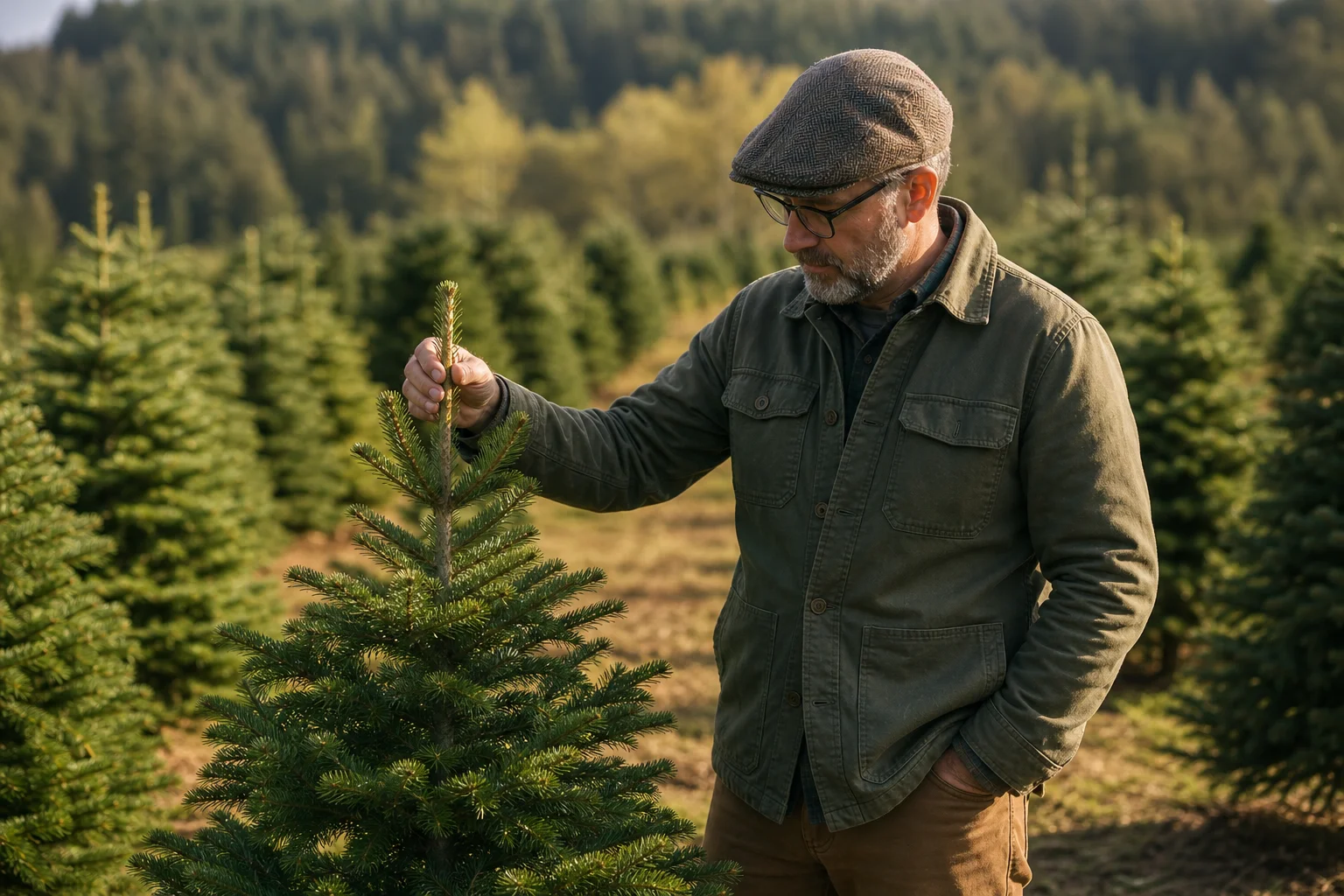
Your Christmas tree this year has nothing to fear from the heatwave: it was already well established long before summer. It's the young saplings, the ones that will reach shop floors by the end of the decade, that took the hit, as seen at this tree farm located in the Pilat regional nature park, in the Loire department.
In the Pilat, half of young Christmas trees didn't survive
At Gérard Piney's tree farm in Doizieux, around half of the young Christmas trees failed to survive the scorching summer, according to leprogres.fr. The regional newspaper describes a five-hectare farm at 800 metres of altitude, at a spot called La Ferramandie, and presents this grower as one of the very last Christmas tree specialists in the massif.
The planting rate puts the loss into perspective: 4,000 saplings per year currently, the paper notes. The grower says he already suffered losses back in 2003, though nothing compared to this year, plus 10% losses the previous season. Facing the drought, he watered by hand, tree by tree: "I watered each fir tree one by one, which saved some of them," he told the newspaper.
Why your December tree is not affected
A tree sold in December was planted several years earlier, then pruned season after season before reaching the size of a living-room tree. Those currently filling sales points have therefore done the bulk of their growing before the summer in question: no cause for concern for the upcoming festive season, leprogres.fr notes, placing the real impact several years down the line.
This time lag explains why a bad weather season is never immediately visible on the shop floor. The effects spread slowly, at the pace of growth, and are only measured at harvest time, not when water stress occurs. For the current season, the real issue lies elsewhere, on the price tags: as we detailed, there is no shortage of Christmas trees this season, despite rising prices.
Isolated case or warning sign for the industry?
One farm doesn't make a national picture. The account gathered by the regional newspaper concerns a plot at altitude, in a massif where this grower is one of the last to cultivate Christmas trees, and no consolidated loss figures for French tree farms as a whole are available at this stage. The true scale will only become clear in the coming seasons, once the surviving trees reach maturity.
Still, two points are worth watching. First, the repetition: this grower explicitly compares this summer to 2003, with losses on an entirely different scale, after a previous season already marked by 10% mortality. Second, the industry's move towards better structure, with progress on origin and traceability, as shown by the first French PGI for Christmas trees, awarded in the Morvan.
In the meantime, December's schedule remains unchanged: a tree to choose, and above all what goes underneath it. To avoid duplicate gifts in the family, you can already create your Christmas list to share before the first shopping trips begin.


Comments 0
No comments yet. Share your experience!
Leave a comment